
Johnson County Criminal Court Records
A criminal court record is the case-level file the court keeps after a charge is filed. In Johnson County, felonies and many state-law criminal matters are handled by Johnson County District Court in the Kansas 10th Judicial District. Municipal ordinance misdemeanors and many city traffic offenses are handled by city municipal courts in places such as Olathe, Overland Park, Lenexa, Shawnee, Gardner, and Leawood.
The criminal court case file can begin with a complaint or information and then add bond orders, arraignment entries, attorney appearances, motions, hearing settings, plea records, trial entries, verdicts, disposition, sentencing orders, probation conditions, revocation filings, restitution, fines, court costs, and warrants when public. The focused charge path is covered separately in Johnson County arrest records and court charges, while this page stays with the full criminal court file.
The Johnson County District Attorney source was assigned to this criminal court records page.
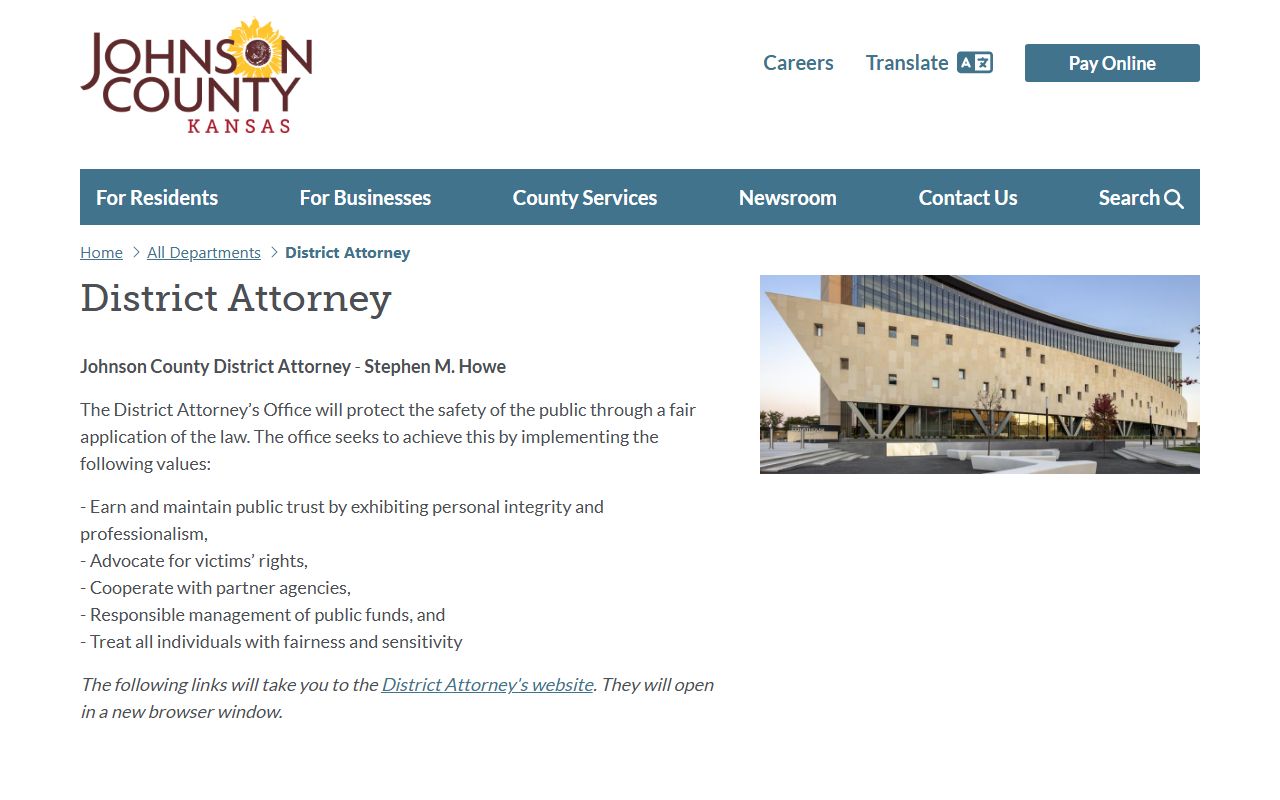
The District Attorney's role matters because the court case starts when a prosecutor files formal charges, not merely when law enforcement makes an arrest.
Search Johnson County Criminal Cases
For Johnson County District Court criminal case records, use the Kansas District Court Public Access Portal or the Kansas eCourt public portal. Johnson County transitioned into Kansas eCourt public access on November 5, 2024. The county court-records page and the Kansas Judicial Branch Request Court Records page remain the fallback channels when public search does not show the needed record.
- Start with the Kansas District Court Public Access Portal and choose case number, party name, or attorney search.
- Select Johnson County if a county filter is available, then use criminal case type or date filters to narrow results.
- Open the matching criminal case and review docket entries, public charges, hearing history, status, and disposition.
- Check whether the case is municipal if the citation, summons, or notice names a city court rather than District Court.
- Request certified dispositions, sentencing orders, or missing documents from the Clerk of the District Court when needed.
A criminal case may not appear immediately after arrest. Law enforcement first submits a report. Prosecutors review the facts. The filed court charge begins the court case. Jail custody or a warrant can exist before the public court file is complete.
Johnson County Criminal Case Flow
Criminal court records are easiest to read as a sequence. The case flow is: Charges Filed › Arraignment › Pretrial and Motions › Plea or Trial › Disposition › Sentencing. Later entries may add probation, restitution, payment, revocation, appeal, expungement, or warrant events.
| Stage | What Happens | How It May Appear |
|---|---|---|
| Charges Filed | Prosecutor files a complaint or information. | Count, statute, severity, filing date, bond, and first setting. |
| Arraignment | Defendant is advised of charges and enters a plea. | Plea, counsel status, bond review, next hearing. |
| Pretrial / Motions | Parties file requests and prepare for plea or trial. | Motions, continuances, discovery issues, hearing dates. |
| Plea or Trial | Case resolves by agreement, dismissal, trial verdict, or other order. | Guilty plea, dismissal, acquittal, amended counts, verdict. |
| Disposition / Sentencing | Court enters final outcome and sentence terms. | Probation, jail, prison, fines, costs, restitution, supervision. |
What Johnson County Criminal Records Show
Public Johnson County criminal court records may show a broad set of fields, but not every document image is public. A docket entry can confirm that a motion or order exists while the actual document remains unavailable online. Redactions may hide personal identifiers, protected addresses, minor names, financial account data, or sensitive victim information.
| Field | What It Shows |
|---|---|
| Case Number | Kansas eCourt criminal case identifier for Johnson County District Court. |
| Defendant | Name and role of the person charged, with some details redacted when required. |
| Charges | Counts, alleged statute, classification, and amendments when public. |
| Bond | Release conditions, surety, recognizance, no-bond status, or bond review entries. |
| Plea | Guilty, not guilty, no contest when used, or later changed plea entries. |
| Motions | Requests filed by prosecution or defense, plus related hearings or orders. |
| Disposition | Outcome of each charge, such as conviction, dismissal, acquittal, diversion, or amended result. |
| Sentence | Probation, jail, prison, restitution, fines, costs, treatment, or court services terms. |
Charges vs Convictions
A charge is an accusation filed in court. A conviction is an outcome after a guilty plea, verdict, or other legally sufficient finding. Johnson County criminal court records can show charges that were dismissed, reduced, amended, diverted, or resolved by acquittal. Do not read the first charge line as the final result.
| Point | Charge | Conviction |
|---|---|---|
| Timing | Appears near the start of the case. | Appears after plea, verdict, or final disposition. |
| Meaning | Alleged offense filed by prosecutor. | Court-recognized outcome on a count. |
| Record Effect | May remain visible unless sealed or expunged. | May affect sentencing, supervision, and state reporting. |
| Common Change | Amended, reduced, dropped, or dismissed. | Can be expunged only if eligible and granted by court. |
District Attorney and Defense Records
The Johnson County District Attorney prosecutes felony offenses, many misdemeanor offenses filed in District Court, juvenile offender matters, traffic crimes charged under state law, and other criminal matters in county jurisdiction. The office is separate from the Sheriff's Office and separate from the Clerk of the District Court. The prosecutor files the court charge; the clerk keeps the court case record.
The District Attorney Victim Assistance source was assigned for criminal court records.
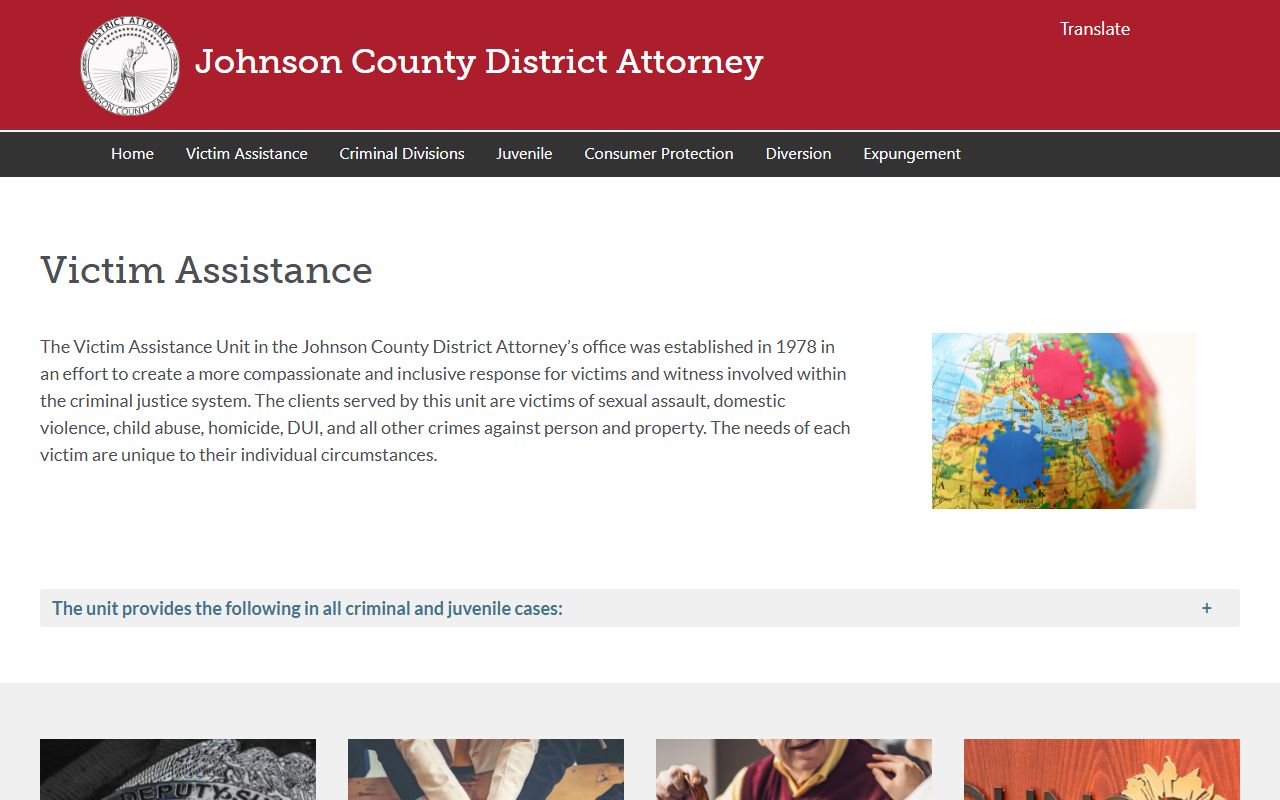
Victim Assistance can affect notices, restitution, victim-impact statements, and hearing contacts, but it does not replace the public court docket.
Public defense is handled through the Kansas State Board of Indigents' Defense Services structure. Defendants who cannot afford counsel request appointed counsel through the court. That appointed-lawyer process is part of the criminal case, not a public legal-aid intake.
Read Dispositions and Sentences
Disposition entries show the outcome. A charge may be dismissed, amended, diverted, resolved by plea, resolved at trial, or continued for later action. Sentencing entries can show probation, supervision through Court Services, jail or prison terms, restitution, fines, costs, treatment conditions, no-contact orders, and revocation risk. Johnson County Court Services can appear in criminal records when supervision, presentence work, or probation conditions are involved.
Probation is court supervision instead of, or after, jail or prison. Revocation is a later proceeding to cancel probation or bond because the court believes conditions were violated. Restitution is money ordered for a victim's loss. These terms matter because a closed conviction can still have active payment, supervision, or revocation entries.
Public Access to Johnson County Criminal Records
Kansas public access rules favor access to public records, while specific laws and court orders limit sensitive criminal and juvenile material. K.S.A. 45-215 states the open-records policy, K.S.A. 45-217 defines public records, K.S.A. 45-218 covers inspection and copying, and K.S.A. 45-221 lists exemptions that can apply to sensitive information.
The Kansas criminal expungement statute source was assigned to this criminal court records page.
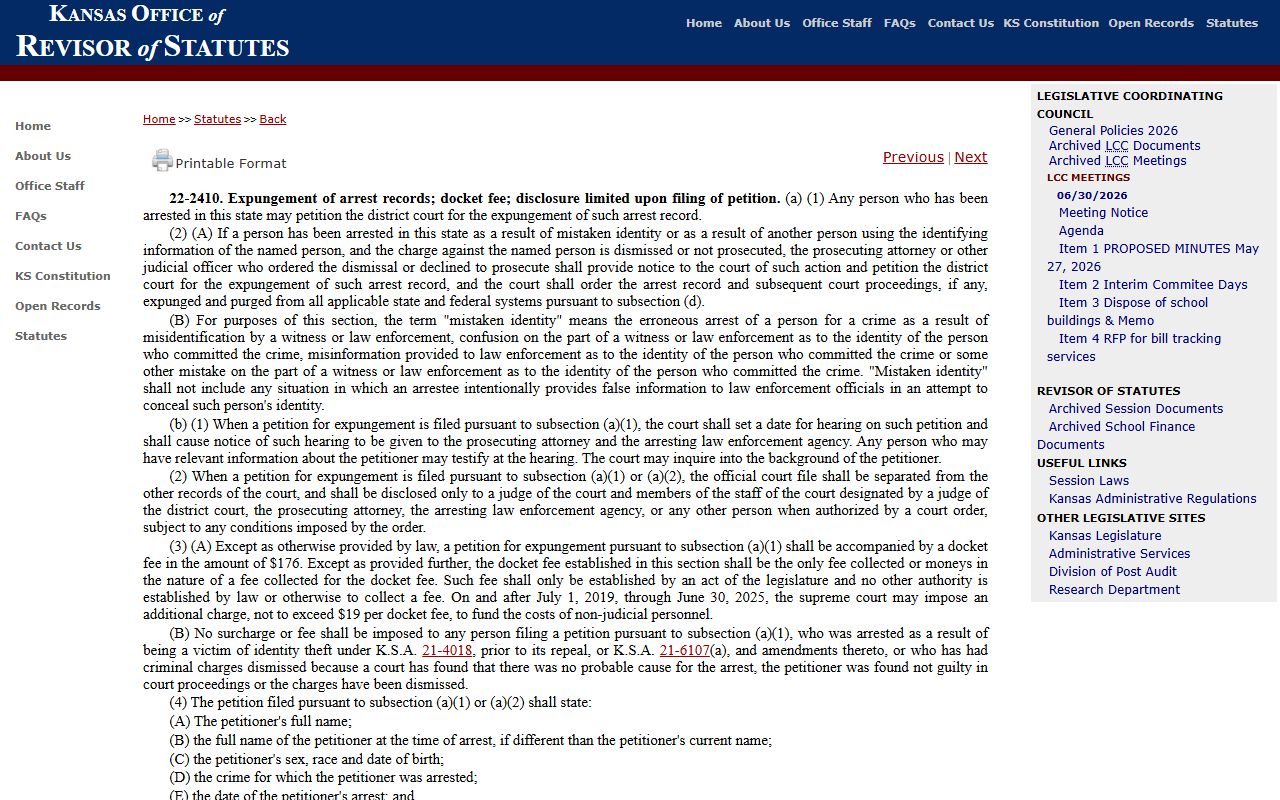
Expungement limits public access only when the person is eligible, files in the correct court, and receives an order granting relief.
Note: A public criminal docket may omit document images, victim details, juvenile information, and sealed or expunged case content.
Sealed vs Expunged Criminal Records
Sealed and expunged are related but not identical. A sealed file is hidden from ordinary public view because a statute or court order restricts access. An expunged Kansas arrest, diversion, or conviction record is treated under the expungement statute, which limits public dissemination after the court grants relief. Expungement does not mean every trace is physically destroyed in every agency system.
| Point | Sealed | Expunged |
|---|---|---|
| How It Happens | By law or judge's order. | By petition and court order under Kansas eligibility rules. |
| Public Search | Usually hidden or restricted. | Not shown in ordinary public access after relief is granted. |
| Scope | Can cover a document, entry, or whole case. | Applies to eligible arrest, diversion, or conviction records. |
| Limits | Authorized parties may still access in some settings. | Law enforcement and statutory exceptions may remain. |
Restricted Johnson County Criminal Records
Juvenile offender files are not treated like adult criminal court records. Kansas juvenile access law limits who can inspect those records. Sealed warrants, protected victim information, mental health material, care and treatment records, protected addresses, minor names, and some law-enforcement-sensitive details may be withheld or redacted.
The expungement process in Johnson County starts with the District Court expungement page and Kansas Judicial Council forms. The petitioner identifies the arrest, diversion, or conviction, checks waiting periods and eligibility, files in the court that handled the case, pays the required fee unless waived, serves required parties such as the prosecutor, and attends a hearing if one is set. Municipal cases may require filing in the municipal court that handled the city charge.
Criminal Records Beyond the Case File
Johnson County criminal court records do not replace statewide criminal-history tools, jail custody tools, offender registries, or warrant searches. The Kansas DOC KASPER system is for sentenced state offenders. The KBI registered offender search is a registry lookup. The Sheriff's JIMS portal is used for county inmates, bookings, releases, and warrants. Active warrant details belong with the Sheriff's Warrant Unit or the issuing court.
Use the criminal court case file for charges, pleas, motions, hearings, dispositions, and sentencing. Use jail and sheriff tools for custody status. Use statewide offender tools when the person has moved into state supervision or a registry category.