
Johnson County Active Warrants
Johnson County warrant records are not a single court list. The Johnson County Sheriff's Warrant Unit is the primary local channel for active warrants held by the Sheriff's Office. The sheriff also points users to the JIMS portal, which is the county's online law-enforcement portal for inmate, booking, release, and warrant tools. District Court bench warrants can also appear in a court docket, and city municipal courts can issue bench warrants when a person misses a city ordinance or traffic court date.
The practical result is simple: a Johnson County warrant search should start with the sheriff when the concern is an active county warrant, then move to the issuing court if the warrant came from a missed hearing, unpaid ticket, or unresolved municipal case. Search warrants and sealed warrants are different. They are not ordinary public lookup records and may be closed while an investigation is active.
The Sheriff's Warrant Unit source for Johnson County warrant records is shown in the official sheriff warrant page.
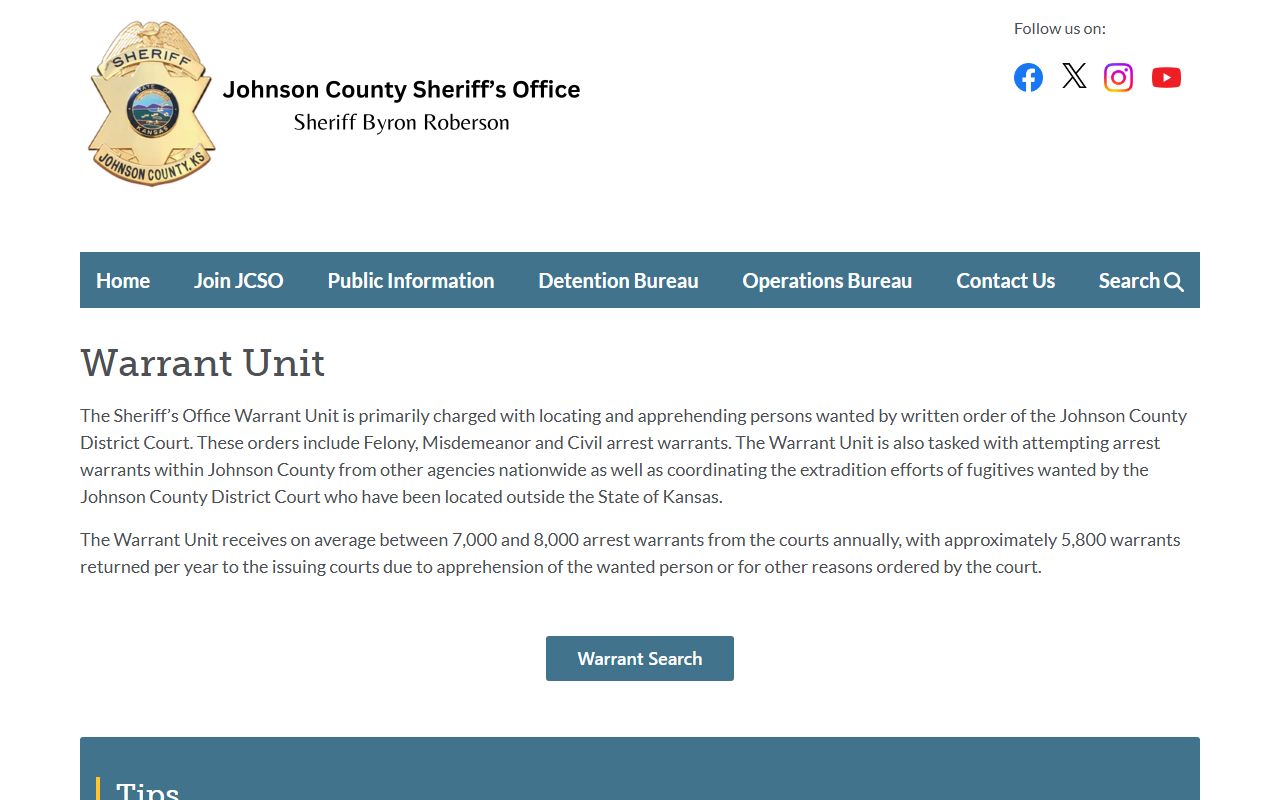
That sheriff channel matters because a court case search and a law-enforcement warrant search may not update at the same time.
Johnson County Warrant Types
Warrants in Johnson County can come from several sources. A judge may issue an arrest warrant after a criminal complaint or other sworn filing. A bench warrant may follow a missed court date, failure to comply with bond terms, failure to pay, or failure to appear on a traffic or ordinance matter. A search warrant authorizes a search of a place or item, not a public arrest-list entry. Some warrants are held by local law enforcement, while others are tied to federal, state, or municipal proceedings.
- Arrest warrant - a court order authorizing arrest on a criminal accusation or related court matter.
- Bench warrant - a judge's warrant, often issued after a missed hearing or failure to comply with court orders.
- Municipal warrant - a city court warrant tied to ordinance, traffic, or city misdemeanor cases.
- Search warrant - an investigative warrant that is not a routine public warrant-search result.
- Sealed warrant - a warrant hidden from ordinary public view by law or court order.
One name can have more than one court matter. Check the issuing court, case number, charge, and bond status before assuming a result belongs to the right person.
Search Johnson County Warrants
The online starting point for a sheriff-held Johnson County warrant is the JIMS portal. The research pass found that direct command-line access to the official JIMS pages returned access errors, so field-level details should be confirmed in a live browser or through the Sheriff's Warrant Unit before anyone acts on a result. For court-issued warrants, the Kansas District Court Public Access Portal may show related District Court docket entries, but it is not a substitute for direct warrant confirmation.
- Open the sheriff's JIMS portal or the Warrant Unit page and search the name as it appears on court or booking records.
- Compare the first name, middle name, case number, charge, issuing court, and bond information if the result gives those fields.
- If the warrant appears tied to Johnson County District Court, check the court docket and contact the Clerk of the District Court or an attorney for case instructions.
- If the warrant is municipal, contact the city municipal court named on the ticket, notice, or warrant record.
- Before appearing in person, ask the Sheriff's Office or court about surrender location, bond, property rules, and timing.
Do not rely on third-party warrant sites for final status. A warrant can be recalled, served, cleared, or newly issued before a private database catches up.
Johnson County Warrant Fields
The JIMS warrant search field capture in the research file was partial because the portal could not be fully inspected from the command-line environment. The captured fields still show the main search pattern: use a legal name first, then narrow the result with any court or warrant detail the portal provides.
| Field Label | Type | Required | Notes |
|---|---|---|---|
| Last Name | Text | Likely required or strongly recommended | Exact spelling improves the chance of finding the correct Johnson County warrant record. |
| First Name | Text | Optional or strongly recommended | Useful for common surnames and family-name matches. |
| Middle Name | Text | Optional if shown | Helps separate people with similar names. |
| Search | Button | Yes | Runs the warrant query after name fields are entered. |
| Reset/Clear | Button | Optional | Clears the form before a new search. |
Note: If the portal is unavailable, use the official Warrant Unit contact path rather than guessing from an old search result.
Municipal Warrant Records
Johnson County has many city courts. Olathe, Overland Park, Lenexa, Shawnee, Gardner, Leawood, and other municipal courts handle city ordinance violations and many routine traffic citations. A missed municipal court date can produce a bench warrant that may not behave like a District Court felony warrant. The issuing city court remains the best place to confirm payment options, appearance dates, recall requirements, and whether a person must appear before a judge.
The Overland Park Municipal Court is one example of the city-court channel used for local ordinance and traffic court matters.
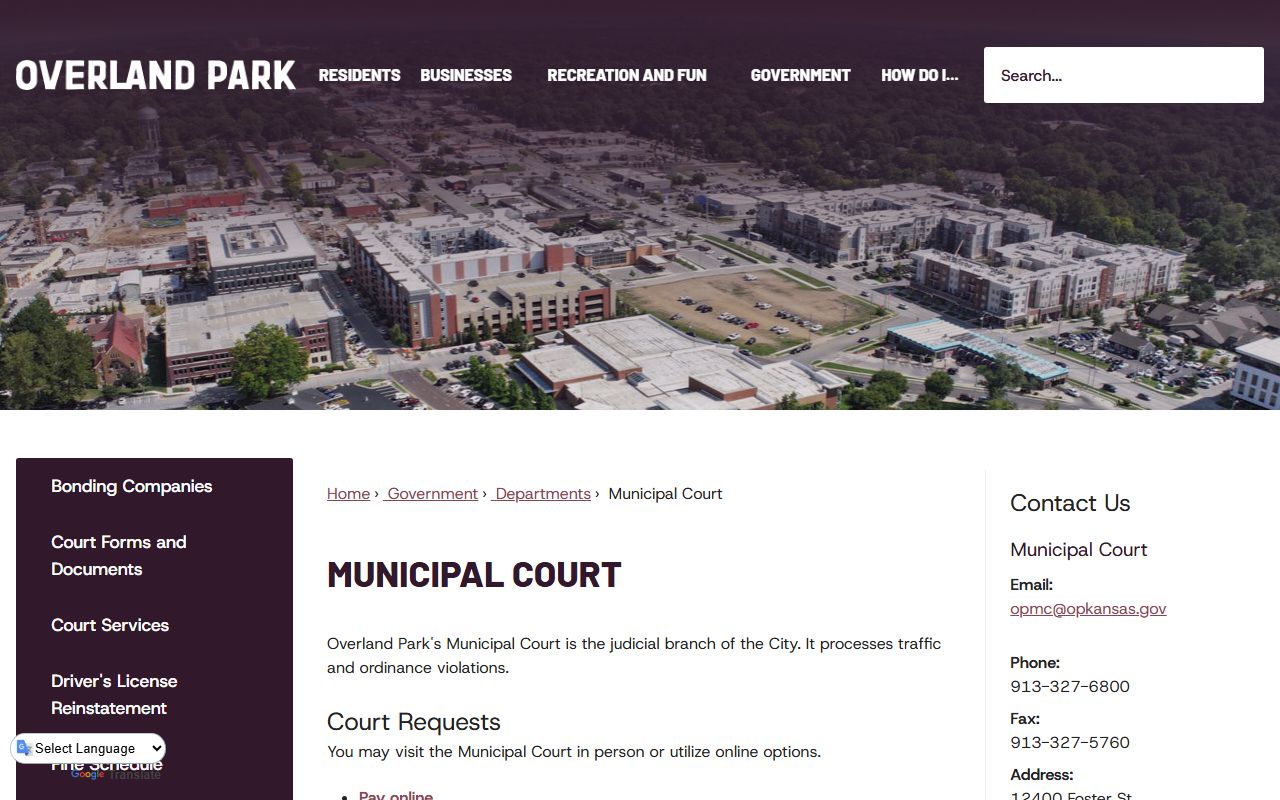
City court sources are important because a Johnson County District Court case search may not resolve a municipal bench warrant.
What Warrant Records Show
A public Johnson County warrant result can be brief. The research file did not capture a live sample warrant listing, so the inventory below reflects the fields the official warrant channel is expected to expose based on its stated purpose and common sheriff warrant structure. Treat the list as a field inventory, not a promise that every result will show every field.
| Field | What It Shows |
|---|---|
| Name | The person associated with the warrant record. |
| Warrant Number | The identifier used by law enforcement or the court. |
| Charge or Offense | The alleged offense, violation, or court matter tied to the warrant. |
| Issuing Court | District Court, municipal court, or another authority that issued the warrant. |
| Case Number | The related court case if one is available to the public. |
| Bond Amount | Any listed bond amount, cash-only status, surety option, or no-bond notation. |
| Date Issued | The date the warrant was entered or issued, if public. |
| Agency | The law-enforcement agency holding or serving the warrant. |
Resolve a Johnson County Warrant
Resolving a Johnson County warrant starts with confirmation. Contact the Sheriff's Warrant Unit, the court listed in the warrant record, or the municipal court shown on the citation. Ask whether the warrant is active, whether bond is set, whether a court appearance is required, and whether the case is a District Court or municipal court matter. For District Court warrants, the Clerk of the District Court can help with public case information, but legal advice must come from an attorney.
Important: Confirm bond, surrender instructions, and court requirements before appearing in person on an active warrant.
After a warrant is recalled, served, or otherwise cleared, public systems may take time to update. Keep receipts, court orders, bond paperwork, and written instructions. If the warrant arose from a traffic case, also check whether the Kansas Department of Revenue has a license consequence that must be handled separately.
Restricted Johnson County Warrants
Kansas public access rules favor access to public records, but not every warrant is open. K.S.A. 45-215 states the public-records policy, while K.S.A. 45-221 lists categories that may be closed or withheld. Juvenile matters, sealed warrants, protected investigative records, and some law-enforcement material can be restricted. Search warrants may remain unavailable while an investigation is active.
Federal warrants follow federal channels, not the Johnson County Sheriff's JIMS portal. Statewide law-enforcement systems may also be restricted and are not the same as a simple public statewide all-warrant search. When a record is missing from the online tool, the best next step is the issuing agency or court, not a broad web search.